
DISCLAIMER:
DISCLAIMER:
These views and opinions are solely my own and not those of the TAPIF program. This is a personal blog documenting my travels abroad and my experiences as a first-year TAPIF assistant. This blog is not sponsored or endorsed by the French Ministry of Education, CIEP (now FEI, France Education International), or the US Cultural Embassy to France.
Now that the reality of my going abroad has finally sinked in, I am pleased to announce and share with you all that I have accepted a position as a TAPIF English Language Assistant in France. I will be in a French public high school in Lille teaching ESL and conversation classes for the 2019-2020 academic school year.
So, what is TAPIF, you might ask? Well, TAPIF stands for the Teaching Assistant Program in France (https://www.tapif.org/index-usa.html). Only in the US and Canada is this particular program referred to as “TAPIF.” Outside of North America, the larger program is simply recognized as assistants de langue en France (language assistant program in France). Assistants from other countries in the program speak French; however, they teach a language other than English, such as Arabic, Italian, German, Dutch, etc.
TAPIF/Assistants de langue program is managed by CIEP (Centre international d’études pédagogiques, now FEI, France Education International). It is a cultural exchange program made possible by the partnership between the US Cultural Embassy to France and the French Ministry of Education. TAPIF is a 7 month program running from October to April. Assistants are allowed to work 12 hours/week, often serving in 1 or 2, upwards to 3 school sites, as per visa de long séjour (long-stay visa) regulations. Language assistants are placed either at the primaire or sécondaire level. Primaire is the primary school level. Assistants at this level will either be assisting in elementary school (école primaire) and/or preschool (école maternelle). Sécondaire is the secondary school level. At this level, assistants will be assisting in middle school (collège) and/or high school(lycée).
Assistants can be placed in small, rural towns or in larger cities. TAPIF assistants apply for the program with the understanding that accommodation will not be provided. It is up to the assistant to look for and arrange housing abroad, oftentimes requiring a garant (guarantor, someone who promises to pay your rent in case you’re unable to do so). Sometimes, depending on the school, assistants are able to be housed on-campus either in assistant-designated housing or in the l’intérnat (boarding house). I was quite lucky that the lycée (high school) where I will serve as the American English Language Assistant is able to accommodate me in the assistant housing on-campus.
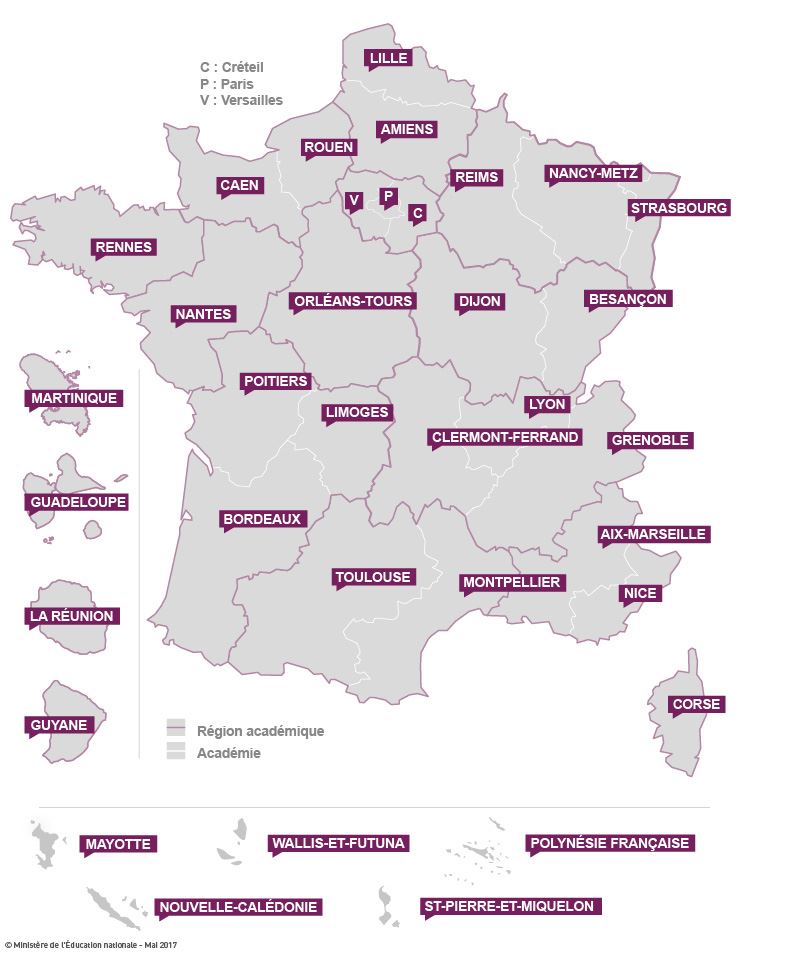
France is divided into 30 académies. 26 are within the metropole of France and 4 are overseas(French Guiana, Guadeloupe, Martinique and Réunion). An académie is an administrative area of the French Ministry of Education and the French Ministry of Higher Learning and Research. It is similar in concept to a school district. However, académies span across a much vaster area called a région académique (academic region). There are 17 régions académiques and each région has a rectorat that is directed by a recteur, often a teacher or professor, nominated by the French President. A région académique might encompass 2 or even 3 académies!
Assistants get to choose 3 académies in order of preference and rank whether they prefer to teach at the primary or secondary level. In my example, I am placed within the Académie de Lille (Academy of Lille). Just because I am placed within the Académie, doesn’t mean I will necessarily be placed in the city proper of Lille and the centre-ville (city center). I was fortunate enough to be placed in the city proper of Lille and am not too far away from the heart of Lille, the seat of the department of Nord, the departmental region where Lille belongs.
In the metropole, the académie de Paris (Academy of Paris) is the most highly sought after, making it the most popular region of choice. Given its central status as the capital city of France, cost of living is indeed very expensive. Hence, that is one of the main reasons why I did not place Paris in my top 3 académie preferences. Stay tuned for my next blog post where I will detail my reasoning for why I chose the académie de Lille as my number one region of preference.
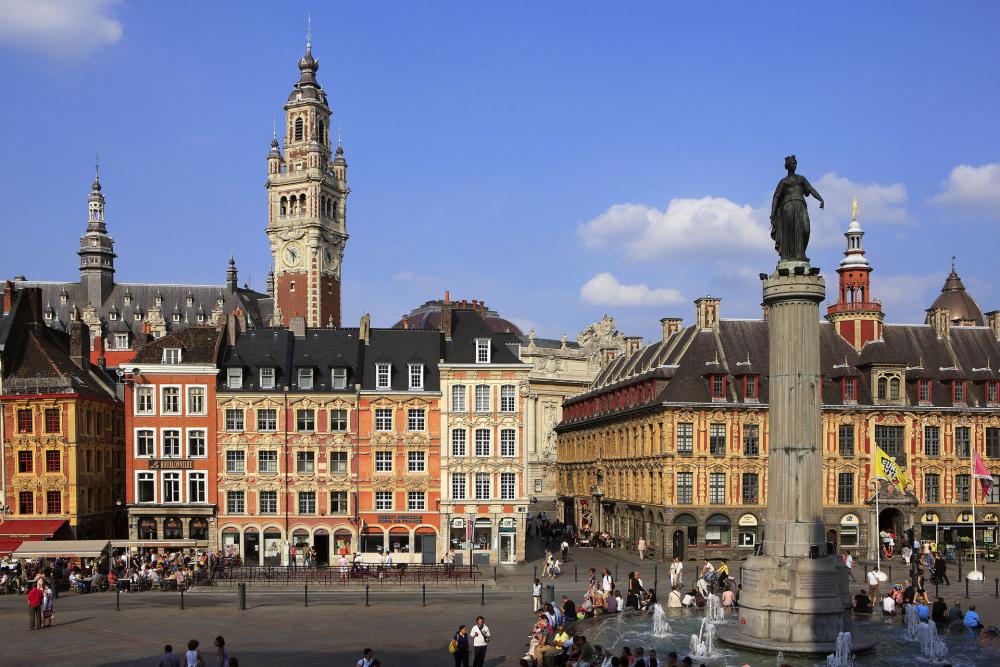
Lille Grand’Place (Place du Général de Gaulle) 
Location of Lille in relation to Paris
 An American in Not Paris